Expanding Creative Worlds with VARCO in the AI Era: The Creative Journey of Six Kookmin University Students

From creatures inspired by Korean shamanic traditions and the historic streets of Seongbuk to the world of virtual idols and a steampunk underground city, six students studying Film and AI Design at Kookmin University brought five distinct worlds to life using VARCO 3D and VARCO Sound. From developing their initial concepts and creating 3D assets and sound to showcasing their work on the media wall at NC AI's headquarters, we spoke with the students about how generative AI expanded their creative processes and possibilities.
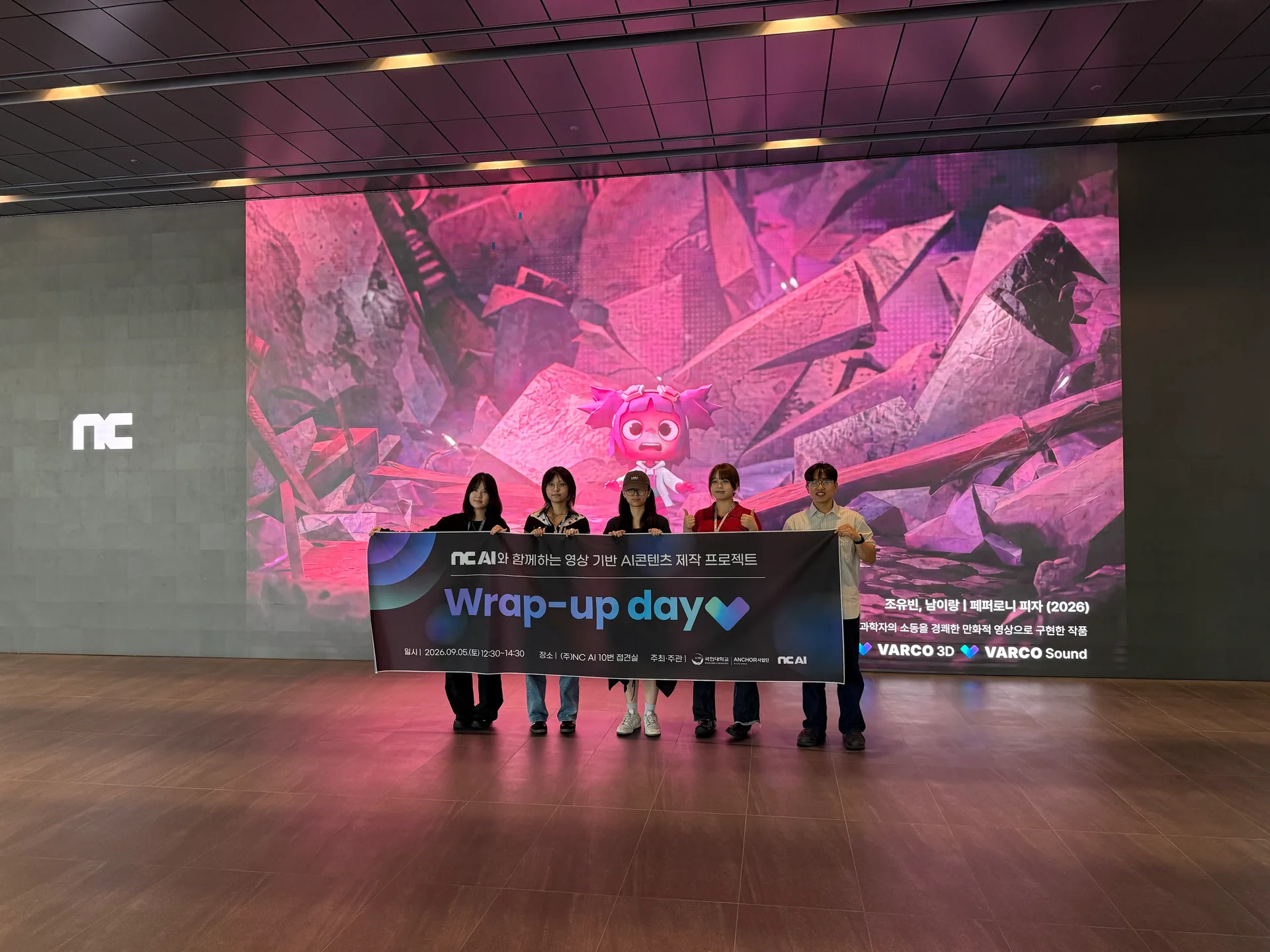
This project was conducted over approximately four months, beginning in May, as part of the "Creative Industry Talent Development" initiative under the Seoul Anchor Project, organized by Kookmin University's Anchor Project Group (formerly RISE). Six selected students participated in five mentoring sessions exploring the role of visual designers in the AI era. Through these sessions, they gained hands-on experience in planning portfolios using VARCO, refining individual projects, and designing practical production pipelines. The first mentoring session took the form of a special lecture titled "Building a Creative Portfolio in the AI Era," attended by approximately 50 students from the participating departments, extending the program's reach to a broader group of students.
Four Months of Creative Exploration and Production
Throughout the project, the students approached generative AI as more than simply a tool for producing results. They began by defining the stories and emotions they wanted to convey, then created the characters and environmental objects needed to bring those ideas to life.
Working across Blender, AI video generation tools, and editing software, they continuously evaluated, selected, and refined their results. VARCO 3D helped them quickly transform ideas into three-dimensional assets that served as visual references for their scenes, while VARCO Sound contributed to the atmosphere and storytelling of their projects. Although they began with the same tools, the final results were entirely different. Rather than simply learning how to use AI tools, the students experienced a creative process centered on defining what they wanted to make, comparing different outcomes, and making decisions based on their own artistic vision.
Q. Tell us about your projects.
Song Hae-yeon (Third-year Film Student) | Sansin
This exhibition-oriented project reinterprets divine beings from Korean shamanic beliefs and folklore as creatures rather than human figures. I used VARCO 3D to create characters, symbolic objects, and environmental elements, while incorporating creature sounds and traditional Korean instrumental sounds through VARCO Sound to create an atmosphere that feels both unfamiliar and distinctly Korean.My goal was to make visitors curious about the folklore that inspired the beings appearing in each scene.
Jeong Da-eun (Third-year AI Design Student) | LOVE · OCEAN · STAR
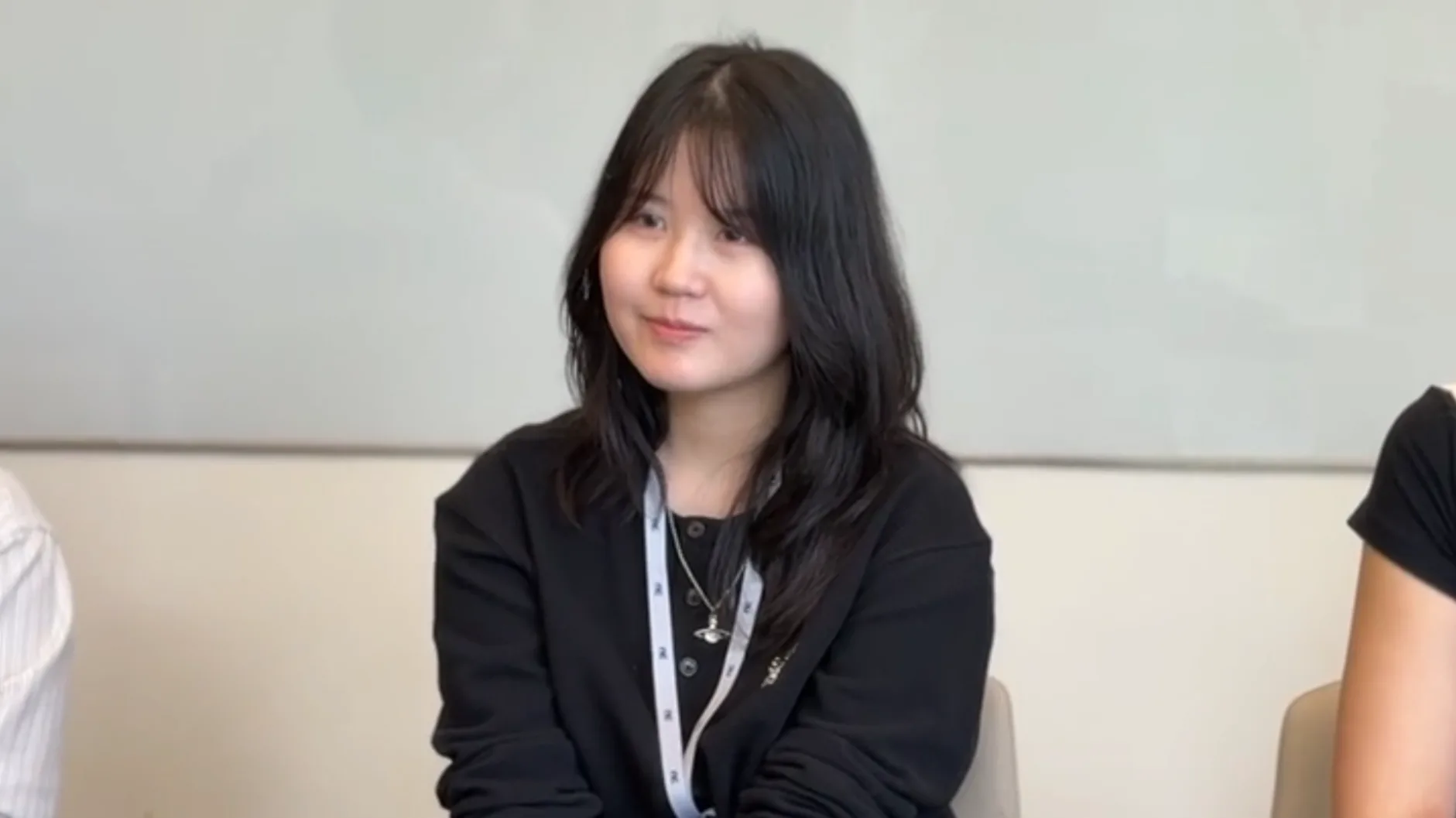
This project is a 3D brand film that expands the concept of four magical girls into a fictional K-pop idol brand. I designed individual spaces and symbolic objects for each member, distinguished by Pink, Blue, Purple, and Green, and developed a visual sequence in which the four spaces connect to form a unified world. Beyond simply creating characters, I wanted to present the group's universe and visual identity as a cohesive brand experience.
Lee Seung-bin (Third-year Film Student) | 2026 Seongbuk Local Department Store AI Brand Film
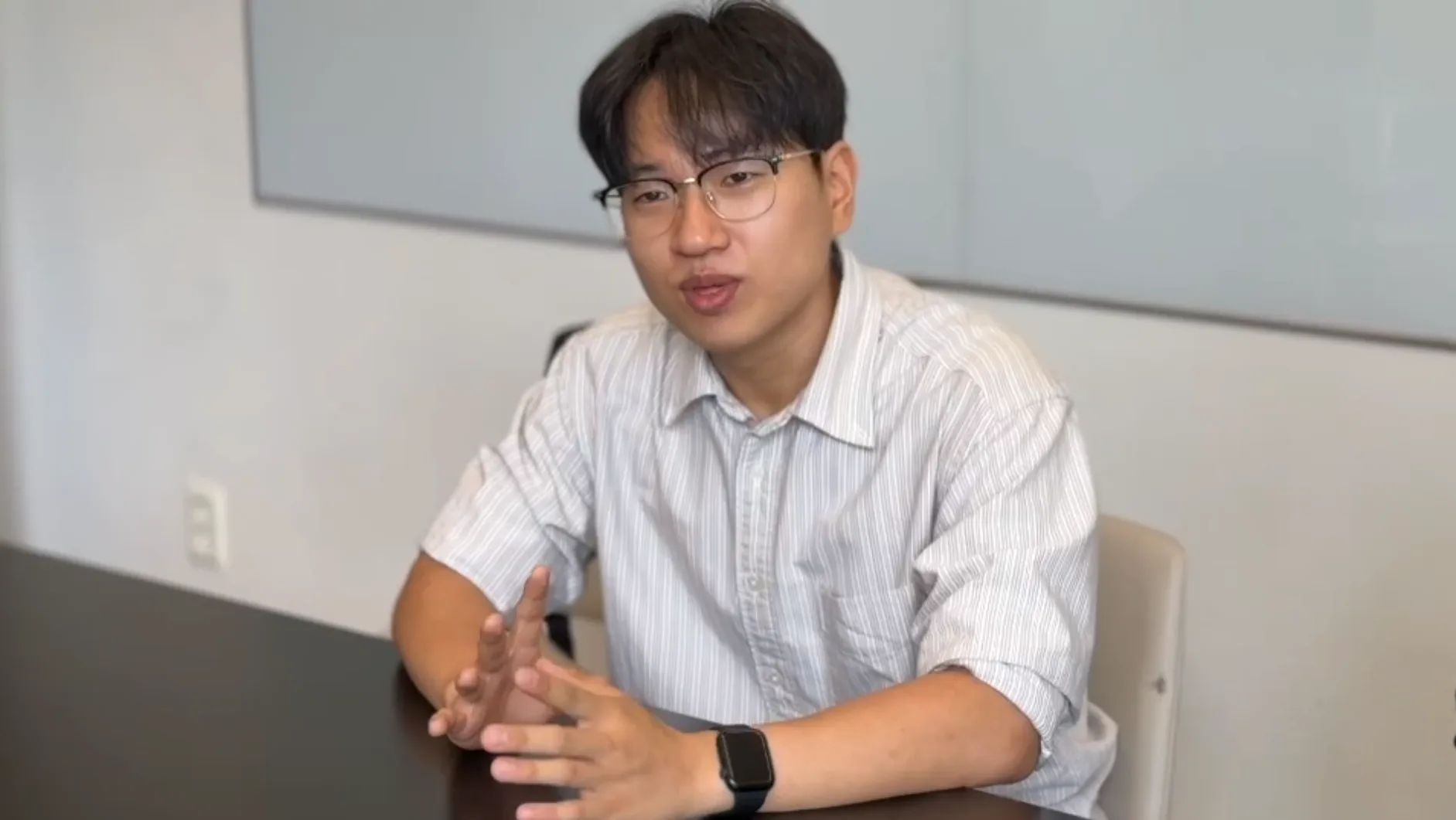
This clay-style 3D animation depicts the transformation of Seongbuk's streets from the 1970s to the present day. The main character, Young-sook, follows a purple balloon through the neighborhood's streets, Seongbukcheon Stream, Simujang, and Hanyangdoseong (the Seoul City Wall), connecting the past and present along the way. I wanted to portray a version of Seongbuk where the warmth of its history coexists with the refined sensibilities of today.
Jo Yu-bin & Nam I-rang (Third-year AI Design Students) | Pepperoni Pizza
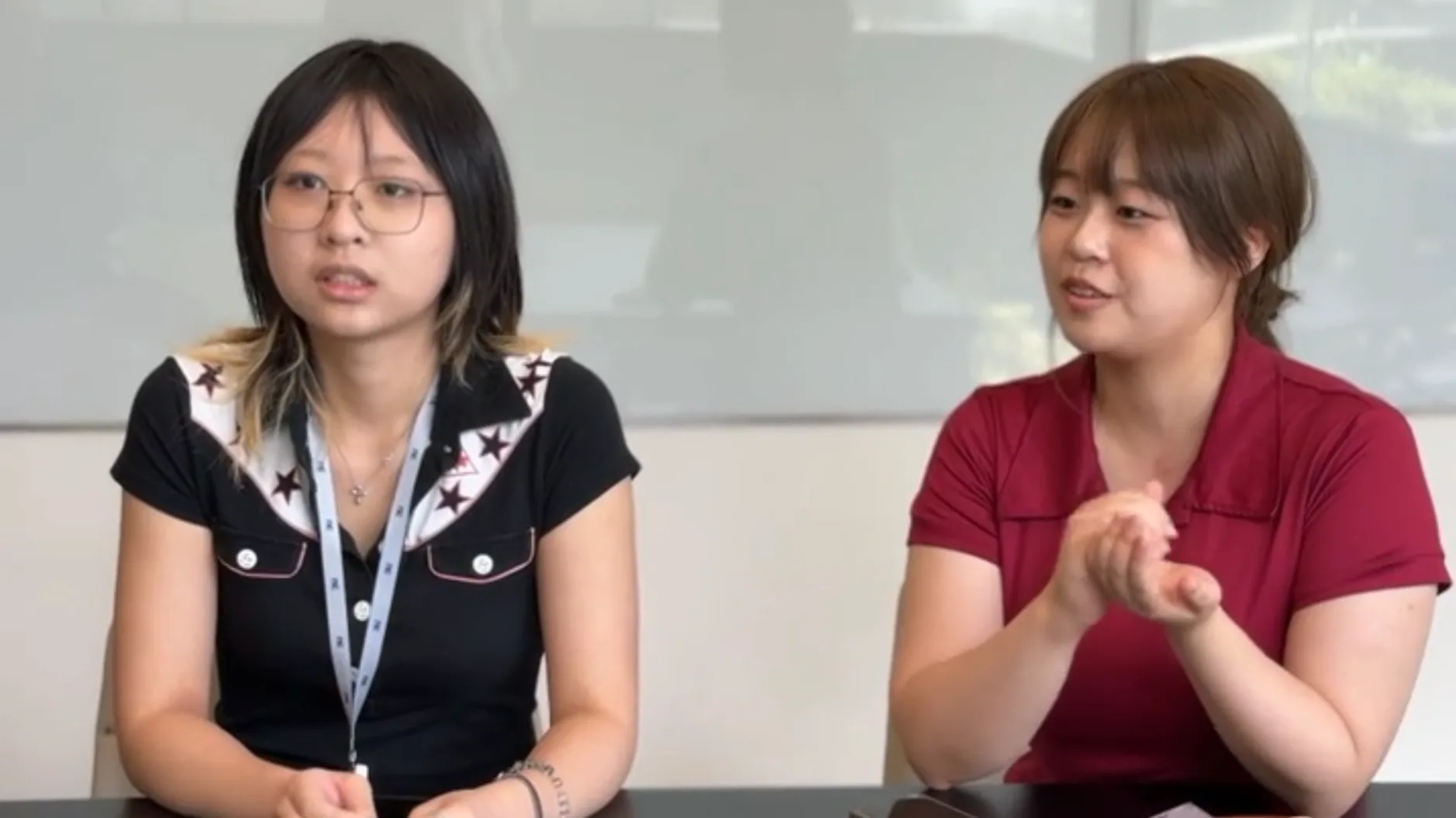
This project tells the story of a symbiote, originally developed as a biochemical weapon to destroy humanity, that escapes from a laboratory. We presented the story in a playful, vibrant, super-deformed (SD) art style. Featuring an eccentric scientist, a giant gorilla-like cat, and a pizza delivery person, we focused on transforming what could have been a disturbing premise into cheerful, cartoon-like scenes using a predominantly pink and purple color palette.
Lee Da-hyun (Third-year AI Design Student) | Aethelgard
This 3D cinematic depicts a steampunk-style underground canal city nestled within a massive vertical canyon. I wanted to capture the overwhelming sense of scale created by aging machinery, flowing water, and multilayered architecture, along with the lonely yet majestic atmosphere of a dystopian world. The final video features both daytime and nighttime scenes, revealing different dimensions of the city's environment.
Q. How did VARCO contribute to your project?
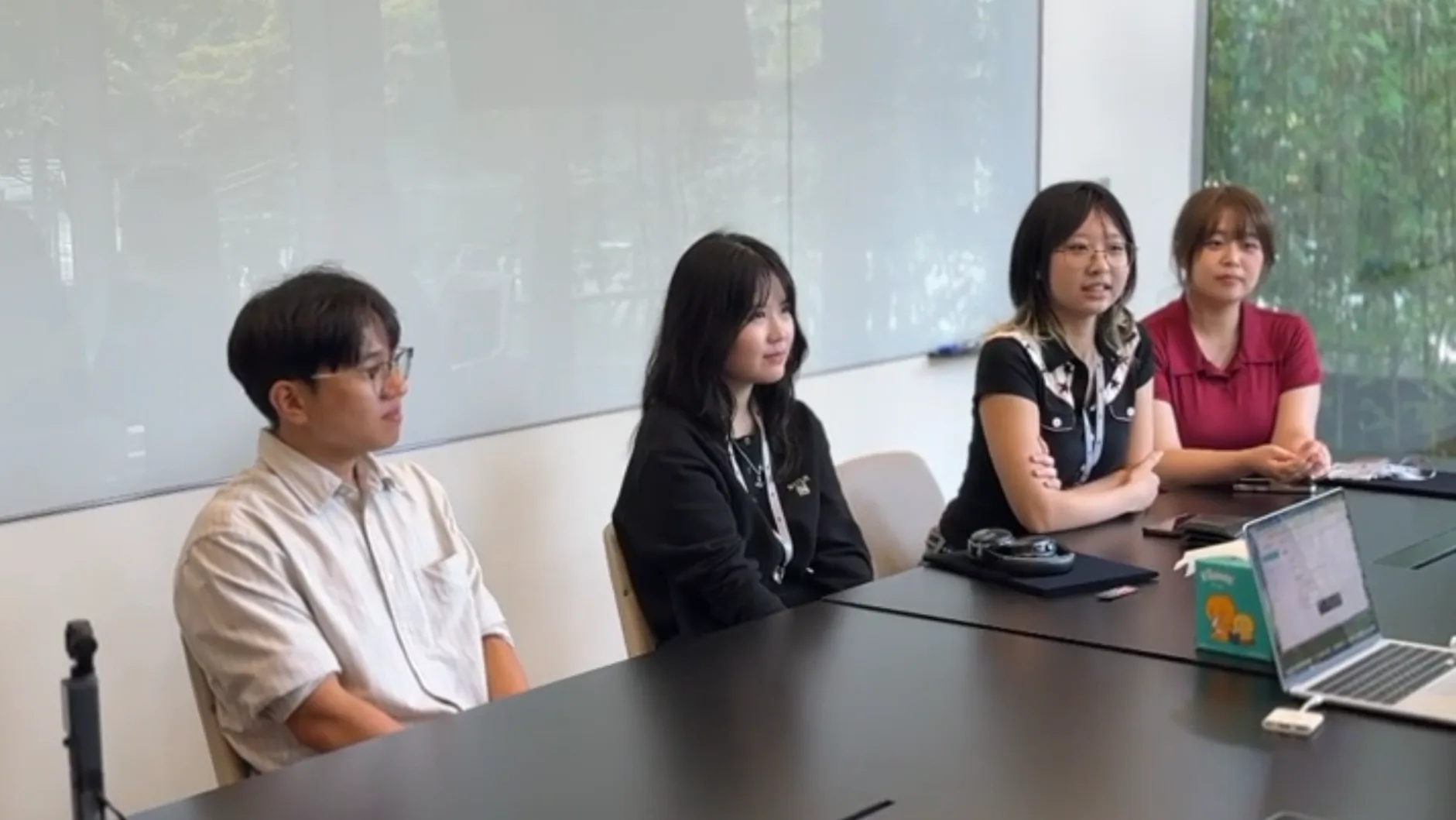
Song Hae-yeon One of the challenges of this project was creating as many assets as possible within the given timeframe.
VARCO 3D allowed me to quickly turn creatures, symbolic objects, and environmental elements into 3D assets. By using VARCO Sound to enhance the creatures' presence and incorporate distinctly Korean sounds, I was able to design both the visual and auditory aspects of the experience together.
Jeong Da-eun The VARCO workshop was a starting point that helped me see generative AI not simply as a tool for creating images, but as a way to explore new possibilities in 3D production. I directly compared several generation methods, including VARCO 3D, and selected the most suitable results for each scene based on their silhouettes, mesh structures, editability in Blender, and compatibility with the project's overall universe.
Lee Seung-bin In narrative-driven videos, maintaining character consistency across scenes is particularly important. After creating a 3D asset of Young-sook using VARCO 3D, I generated reference images from multiple angles, including close-ups, bust shots, full-body shots, and rear views. I then used these references during the AI video generation process. I also used VARCO Sound to develop dream-pop and ambient background music, along with everyday sounds that evoke the neighborhood streets of the 1970s and 1980s.
Jo Yu-bin & Nam I-rang We used VARCO 3D to create props, surrounding environments, and characters with relatively limited movement. For the main characters, whose expressions and actions were more important, we modeled them directly in Blender. The generated assets were refined through remeshing and shader adjustments to ensure they blended naturally within the same visual environment. We also used VARCO Sound to create background music that matched the video's bright and quirky atmosphere.
Lee Da-hyun To fill such a large environment within a limited timeframe, I couldn't create every element using the same approach.
I used VARCO 3D to quickly generate environmental assets and props. For areas frequently captured by the camera, I separated elements such as walls, windows, and pillars to add more detail, while constructing other areas with larger assets. I also incorporated VARCO 3D 2.0 midway through the production process to improve mesh and texture quality.
Q. What were the biggest challenges, and how did the experience change your approach?
Song Hae-yeon Since this was my first time working in 3D, the entire process of transforming an imagined being into a fully realized three-dimensional scene was a major challenge. However, after completing a scene, I discovered how enjoyable it could be to create spaces and characters in a way that differs from filmmaking. Rather than ending this experience with a single project, I hope to continue creating a series of works that further expand the same universe.
Jeong Da-eun At first, I wasn't familiar with 3D tools. But after completing three projects, I began imagining the scenes I wanted to create before worrying about whether they would be technically achievable. I also learned that what matters most is not which AI tool you use, but what you choose and how you refine the results to achieve your vision. This experience helped me grow from someone who simply uses a particular tool into a designer who evaluates and selects tools according to the purpose of each project.
Lee Seung-bin Since I had never worked with 3D before, the process initially felt overwhelming. Even arranging assets and building a space myself was unfamiliar. I repeatedly refined the lighting, added props and background elements to suit a vertical screen format, and worked on creating a seamless looping animation where the beginning and ending connect naturally. I learned that to grow as a director who can recognize details others might overlook, I need to embrace new tools and develop a deeper understanding of the entire production process.
Jo Yu-bin & Nam I-rang An important part of the process was continuously revising the concept by asking each other questions.
We worked together to determine how to portray a psychopathic scientist's behavior without making it overly violent, how to distinguish the personalities of the symbiote and the cat, and how to address distortions in AI-generated video during fast-moving sequences.
By adjusting our pipeline to create motion in the viewport first and then combining it with AI rendering, we confirmed that clear directorial intentions should come before the choice of tools.
Lee Da-hyun I initially envisioned a Polynesian-inspired archaeological site, but decided to change direction because the concept risked becoming too similar to my reference materials. I eventually shifted toward a medieval-inspired underground city.
After that, the biggest challenge was finding the right balance between the scale of the environment and the level of detail.
I completed the overall scale first, then increased the detail in key areas that would appear on camera. Finally, I added variations between day and night to reveal different aspects of the same environment.
Q. How will this experience influence your future work?
Song Hae-yeon I want to expand my creative practice into 3D while maintaining my own perspective and artistic style. Building on the production process I learned through this first project, my goal is to further develop the worldbuilding and visual quality of the next works in the series.
Jeong Da-eun Rather than showing only the finished work, I want my portfolio to capture the decision-making process, from Concept and AI Exploration to Compare and Select, Blender Refinement, and Final Scene. I also hope to expand my work beyond an online portfolio and exhibitions, eventually bringing it to the market.
Lee Seung-bin The experience of building an environment myself and turning it into a completed piece will be a valuable asset in my future work as a video director. I want to grow into a director who understands a wide range of technologies and production processes, and I also hope to make more active use of VARCO Sound in my next project.
Jo Yu-bin & Nam I-rang We plan to organize our production plan and completed video into our portfolios and explore opportunities to submit the project to relevant competitions. We also hope to further refine the collaborative production methods and problem-solving approaches we developed during this project.
Lee Da-hyun I learned that the unpredictable results of generative AI don't always have to be seen as disadvantages. They can also be used creatively, such as when producing the naturally aged and weathered textures of a city.
Going forward, I hope to develop this cinematic into an explorable game level with a larger, more fully realized universe.
Five Worlds Come Together on the Media Wall
On September 8, five works—Pepperoni Pizza, Sansin, LOVE · OCEAN · STAR, Aethelgard, and Seongbuk Local Department Store—were presented on a large media wall at NC AI's headquarters during the project's final showcase. The event brought together a diverse range of creative formats, including cartoon-style animation, a virtual idol trailer, a 3D environment project, and brand films. Students who completed the project were awarded certificates recognizing them as "NC AI VARCO Official Creators." Their completed works are expected to serve as starting points for future creative endeavors, including portfolios, ongoing series, game levels, and competition submissions.
Connecting Creative Learning with Industry Practice
NC AI plans to expand opportunities for students to showcase their projects and further develop them into portfolio pieces and future creative work. With the students' consent, outstanding projects may be featured through NC AI's official channels, events, and exhibition spaces. NC AI is also exploring ways to connect these creations with potential commercialization opportunities and follow-up production.
The production cases and student feedback gathered during this project will also inform future university collaboration programs and educational curricula. NC AI will continue expanding partnerships with universities and educational institutions to bridge industry technologies and academic learning. Through these collaborations, the company aims to further develop programs that allow participants to experience the entire creative workflow, from concept development and asset creation to sound production, editing, and portfolio development.
AI That Expands Creative Choices
The six students' works demonstrate that there is no single right answer when it comes to creating with generative AI.
Each project used VARCO differently, whether to create reference assets that maintain character consistency, efficiently construct expansive environments, or design sounds for unfamiliar creatures. At the center of these processes was not the technology itself, but the creative intent and decisions of the artists behind the work.
What initially seemed like an unfamiliar 3D tool gradually became a new creative language through which each student could express their own world. NC AI will continue collaborating with educational institutions to support creators in experimenting freely, exploring diverse possibilities, and making their own creative choices.


